
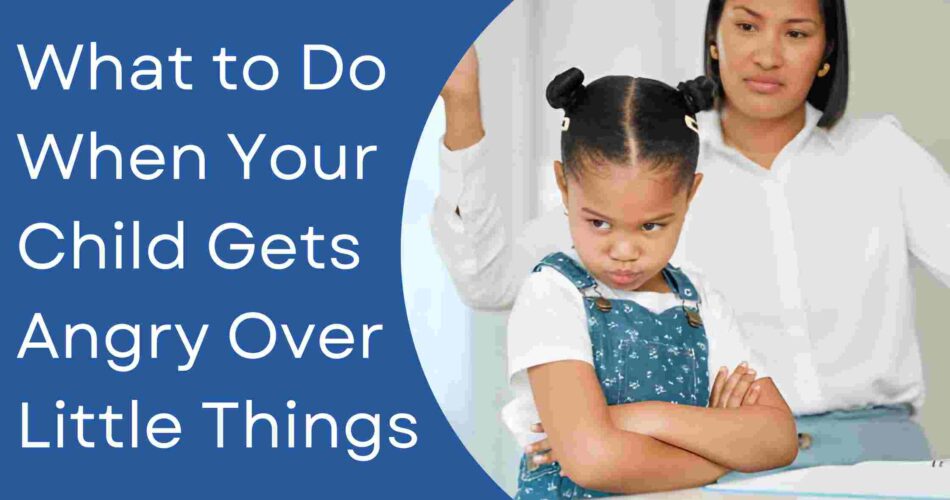
What to Do When Your Child Gets Angry Over Little Things. It happens so quickly. Everything is fine for a minute… In the next minute, your child is screaming, crying, or having a complete meltdown over something small. A biscuit that is broken. The wrong cup. A brother or sister touching their toy. And you wonder, “Why is my kid getting so angry over little things?”
It’s hard to understand. It’s tiring. And sometimes it makes you feel bad, especially when it happens in public.
But here’s the truth that most parents don’t know: It’s not really about the little thing. Let’s talk about what’s really going on and what you can do that will really help.
The Real Reason Small Things Cause Big Reactions
When your child explodes over something tiny, it’s easy to think:
“They’re overreacting”
“They’re being dramatic”
“This doesn’t make sense”
But for your child?
It makes perfect sense.
Because what looks small to you may feel big inside them.
Children don’t just react to what’s happening in the moment.
They react to everything they’re already carrying emotionally.
So that “small” trigger?
It’s often just the last drop in a full cup.

Why Your Child Gets Angry Easily
Let’s look at the real reasons why these things happen.
1. Their Emotions Build Up Throughout the Day.
Think about what your child did that day:
- Stress at school
- All day long instructions
- Sharing, waiting, and following the rules
- School pressure
They keep it together until they can’t anymore.
Example:
Your child comes home from school and blows up over food or homework.
It’s not about the food.
It’s emotional overload finally coming out.
Kindly check:
- No Yelling, Just Results: Positive Discipline That Works
- How to Raise Emotionally Intelligent Kids: Real-Life Strategies That Work
2. They Feel Safe Enough to “Let It Out” at Home
This one surprises many parents.
Kids often behave worse at home because:
Home is their safe space.They know:
They won’t be judged
They won’t be rejected
They can release their emotions
So all the feelings they held in outside… come out with you.
3. They Don’t Yet Have Emotional Control
Children are still learning how to:
Regulate emotions
Handle frustration
Stay calm under stress
So when something goes wrong—even something small—it can feel overwhelming.
4. They Struggle With Disappointment
For many kids, especially younger ones:
Things not going their way = big emotional reaction
Examples:
Wanting a specific plate
Expecting a certain outcome
Not getting what they imagined
Their brain isn’t fully developed to handle disappointment calmly yet.
5. They’re Tired, Hungry, or Overstimulated
Sometimes, the answer is very simple.A child who is:
Hungry
Sleep-deprived
Overstimulated (especially from screens)
…is much more likely to react strongly.
6. They Feel Unheard or Overlooked
When children feel ignored or dismissed, their emotions can come out stronger.Instead of saying:
“You’re not listening to me”
They show it through anger.
Signs That It’s More Than Just “Little Things”
If you see these things, pay more attention:
Your child does this several times a day.
The rage seems to come on suddenly or strongly.
Afterwards, they have a hard time calming down.
It’s hurting your schoolwork or friendships.
These are signals that your child may need more emotional support, not punishment.
What to Do When Your Child Gets Angry Over Little Things
Now let’s speak about solutions—real items you can start implementing right away.
1. Pause Before You Act
Your first instinct might be to correct, scold, or shut the behavior down quickly.
But reacting with anger to your child’s anger only makes things worse.
Instead, pause.
Take a breath and remind yourself:
“My child is struggling, not trying to frustrate me.”
Your calmness makes them calm.
This small mindset shift changes everything.
2. Connect to correct
Sometimes, frequent anger is a cry for attention.
Before you correct someone’s behaviour, make an emotional connection.
- Get down to their level.
- Use a gentle voice.
- Be understanding.
A connected child is a calmer child.
They are more likely to listen once they feel understood.
3. Look Beyond the “Little Thing”
What seems small to you may feel BIG to your child.
Children don’t just react to what’s happening in the moment—they react to everything they’re carrying inside:
- Hunger
- Tiredness
- Overstimulation
- Feeling ignored
- Frustration they can’t express
So when your child cries because their cup is the “wrong color,” it’s rarely about the cup.
4. Teach Emotional Words
Many children get angry over small things because they don’t know how to explain what they feel.
Anger becomes their default language.
Help them expand their emotional vocabulary:
- “Are you feeling frustrated?”
- “Did that make you sad?”
- “Are you tired?”
As time goes by they’ll learn to express instead of explode.
5. Teach “Better Ways” to Show Anger
Don’t just say:
“Stop yelling”
Teach other options:
- “Say what you mean”
- “Tell me what made you angry.”
- “First, take a deep breath.”
You’re not just halting bad behaviour; you’re also learning new abilities.
6. Set Gentle but Firm Boundaries
Understanding your child doesn’t mean allowing bad behavior.
You can validate feelings while still setting limits:
- “I understand you’re angry, but we don’t hit.”
- “It’s okay to be upset, but it’s not okay to throw things.”
This teaches emotional control without shame.
7. Check for Patterns
If your child gets angry over “little things” often, look for patterns:
When does this generally take place?
- Does it happen more in the evening? (Tiredness)
- Before meals? (Hunger)
- After school? (Overwhelm)
- Before you go to bed?
- When you’re on the screen?
Once you identify triggers, you can prevent many outbursts before they start.
8. Stay Calm (Even When It’s Hard)
Your calmness is your child’s anchor.
If you raise your voice, they escalate.
If you stay calm, they slowly settle.
You don’t need to be perfect—just intentional.
Try saying:
- “I can see you’re upset.”
- “That really frustrated you, didn’t it?”
This helps your child feel understood, which reduces the intensity of the anger.
9. Cut down on too much stimulation
If your child is always cranky:
- Spend less time in front of screens
- Make time during the day to be quiet.
- Encourage playing outside
This helps them control their feelings in a natural way.
10. Create Daily “Emotional Check-In” Time
This is simple but powerful.
Spend 10 to 15 minutes per day:
- Speaking
- Playing
- Hearing
- Laughing
- No distractions.
- Just be fully present.
Kids sometimes just need a secure place to let out their feelings before they get too strong.
11. Create a Calm-Down Routine
Instead of punishment, teach your child how to regulate emotions.
Some simple calming strategies:
- Deep breathing (make it playful)
- Quiet corner or safe space
- Hugging a pillow or stuffed toy
- Taking a short break
Practice these when your child is calm—not in the middle of a meltdown.
12. Model the Behavior You Want
Children learn more from what you do than what you say.
If they see you:
- Staying calm under pressure
- Expressing emotions in a healthy way
- Handling frustration without yelling
They will slowly copy you.
13. Be Patient—It’s a Process
Emotional regulation is a skill.
And like any skill, it takes time to develop.
Your child won’t change overnight—but with consistency, you will start seeing progress.
A Simple Truth That Makes Everything Different
It’s easy to imagine when your child gets angry about little things that
“They’re not easy to deal with.”
But this is what usually happens:
It’s a tough time for them.
That transformation from judging to understanding impacts how you act.
And when your answer changes… Your child’s behaviour also starts to shift.
What to Do When Your Child Gets Angry Over Little Things
Final Thoughts
When your child gets angry over little things, it’s not a sign of a “bad child.”
It’s a sign of a child who needs guidance, understanding, and support.
In other words, they are continuously learning.
They sometimes feel like they can’t handle it.
They require more than just being told what to do; they need help.
Those “little things” won’t seem so large anymore if you are patient, consistent, and connected.
And the way you respond in those small moments?
That’s what shapes how they handle emotions for life.